Address
Asirvanam Benedictine Monastery
Anchepalya, Kumbalgodu Post Bangalore
Karnataka Pin: 560074, India.
Address
Asirvanam Benedictine Monastery
Anchepalya, Kumbalgodu Post Bangalore
Karnataka Pin: 560074, India.


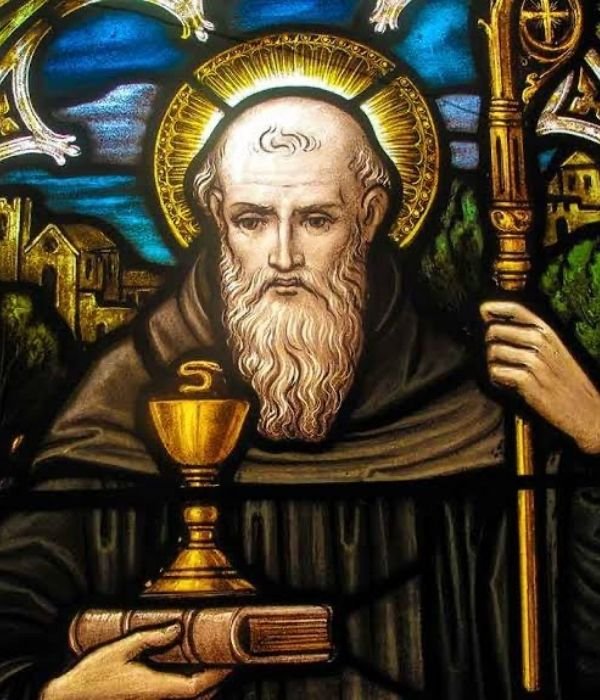
St. Benedict of Nursia is known as the Father of Western Monasticism. His life and teachings shaped Christian monastic life in Europe and continue to guide Benedictine communities worldwide.
Early Life
St. Benedict was born around 480 AD in Nursia (modern-day Norcia, Italy) to a noble Roman family. He was sent to Rome for classical studies but became deeply troubled by the moral decay he witnessed there. Seeking a life dedicated entirely to God, he abandoned his studies.
Life of Solitude
Benedict withdrew to Subiaco, where he lived as a hermit in a cave for about three years, dedicating himself to prayer, fasting, and spiritual struggle. During this time, he gained a reputation for holiness and wisdom.
Monastic Leadership
Eventually, monks from a nearby monastery asked Benedict to become their abbot. His strict discipline caused resistance, and according to tradition, some monks even tried to poison him. After this, Benedict returned to Subiaco and founded twelve small monasteries, each with a superior and twelve monks.
Monte Cassino
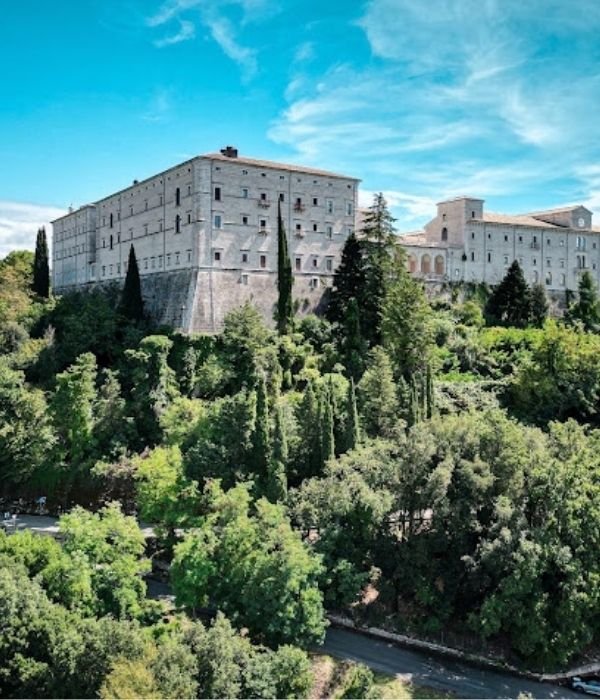
Around 529 AD, St. Benedict moved south and founded the famous monastery of Monte Cassino. There, he destroyed a pagan temple and established a Christian monastic center that became a model for monasteries across Europe.
The Rule of St. Benedict
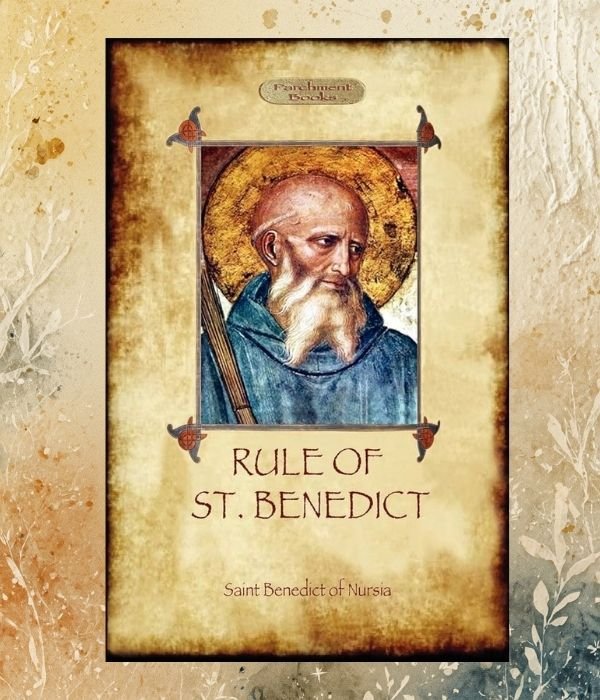
At Monte Cassino, Benedict wrote the Rule of St. Benedict, a balanced guide for monastic life centered on prayer, work, obedience, humility, and community life. Its famous principle is “Ora et Labora” (Pray and Work).
Death and Legacy
St. Benedict died around 547 AD, standing in prayer, supported by his monks. His Rule spread throughout Europe, preserving learning, culture, and Christian faith during the Middle Ages.
In 1964, Pope St. Paul VI proclaimed St. Benedict the Patron Saint of Europe.
Feast Day
11 July (Roman Catholic Church)
Prayer and daily work must be balanced. Work is a form of prayer, and prayer gives meaning to work.
Monks must obey the Abbot and the Rule with humility, seeing obedience as obedience to Christ.
A monk commits to one monastery for life, learning perseverance, patience, and community living.
St. Benedict describes 12 steps of humility, teaching monks to overcome pride and grow closer to God.
Silence is essential for listening to God. Speech should be thoughtful, necessary, and charitable.
Monks live as brothers, sharing everything in common and caring for one another with love and respect.
The Rule avoids extremes. Food, sleep, work, and prayer should all be practiced with balance.
“All guests who present themselves are to be welcomed as Christ.” Hospitality is a sacred duty.
Special care must be shown to the sick, elderly, and young, reflecting Christ’s compassion.
Daily life follows a structured schedule, helping monks live with purpose and spiritual focus.
The Rule begins with “Listen carefully,” emphasizing attentive listening to God, others, and one’s conscience.
A lifelong commitment to spiritual growth, simplicity, chastity, and detachment from worldly desires.